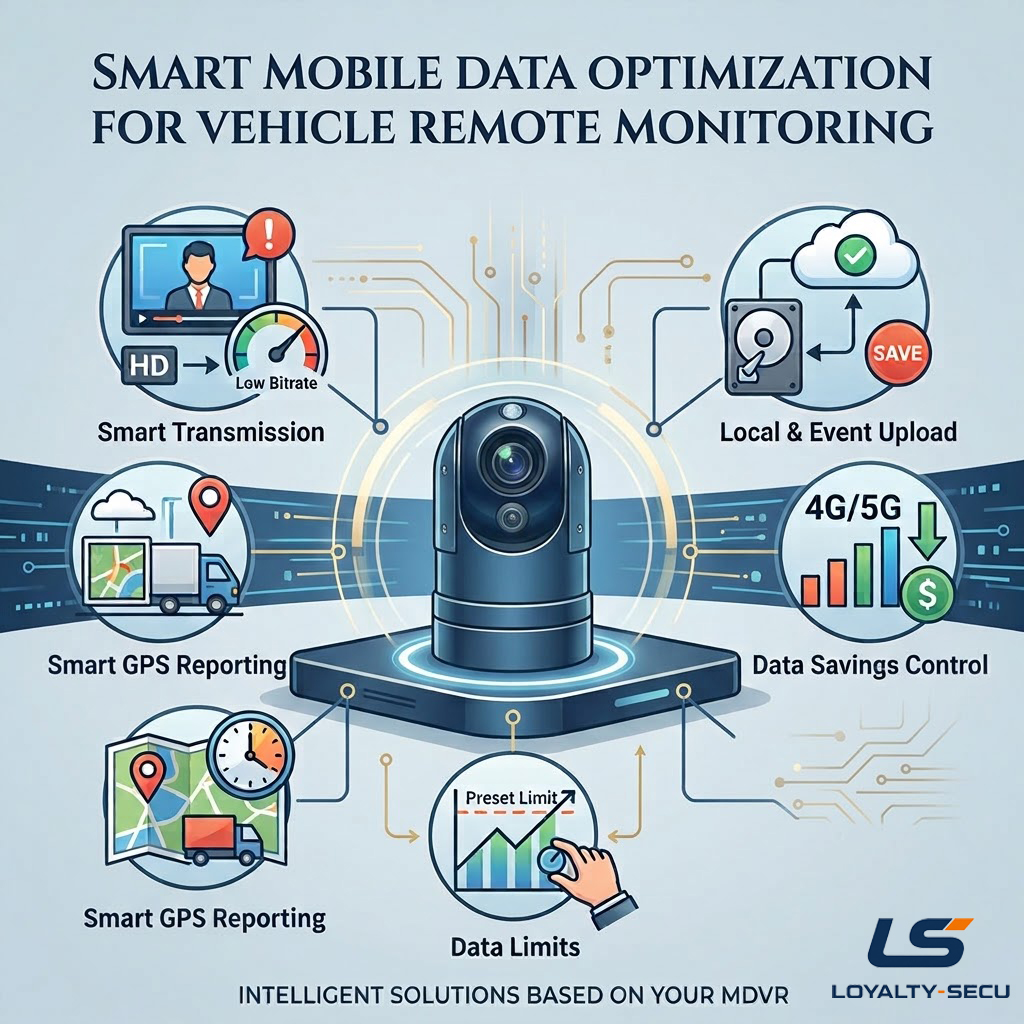
Vehicle remote monitoring systems rely on mobile networks to transmit live video, upload alarm notifications, and report GPS tracking data. However, continuous transmission of high-definition video can consume significant amounts of mobile data and increase operating costs.
For fleet operators, optimizing mobile data usage is an important way to control costs while maintaining essential remote monitoring functions. The following methods can help reduce unnecessary data consumption.
1. Optimize Video Transmission Strategies
Adjusting video transmission settings is one of the key ways to reduce mobile data usage.
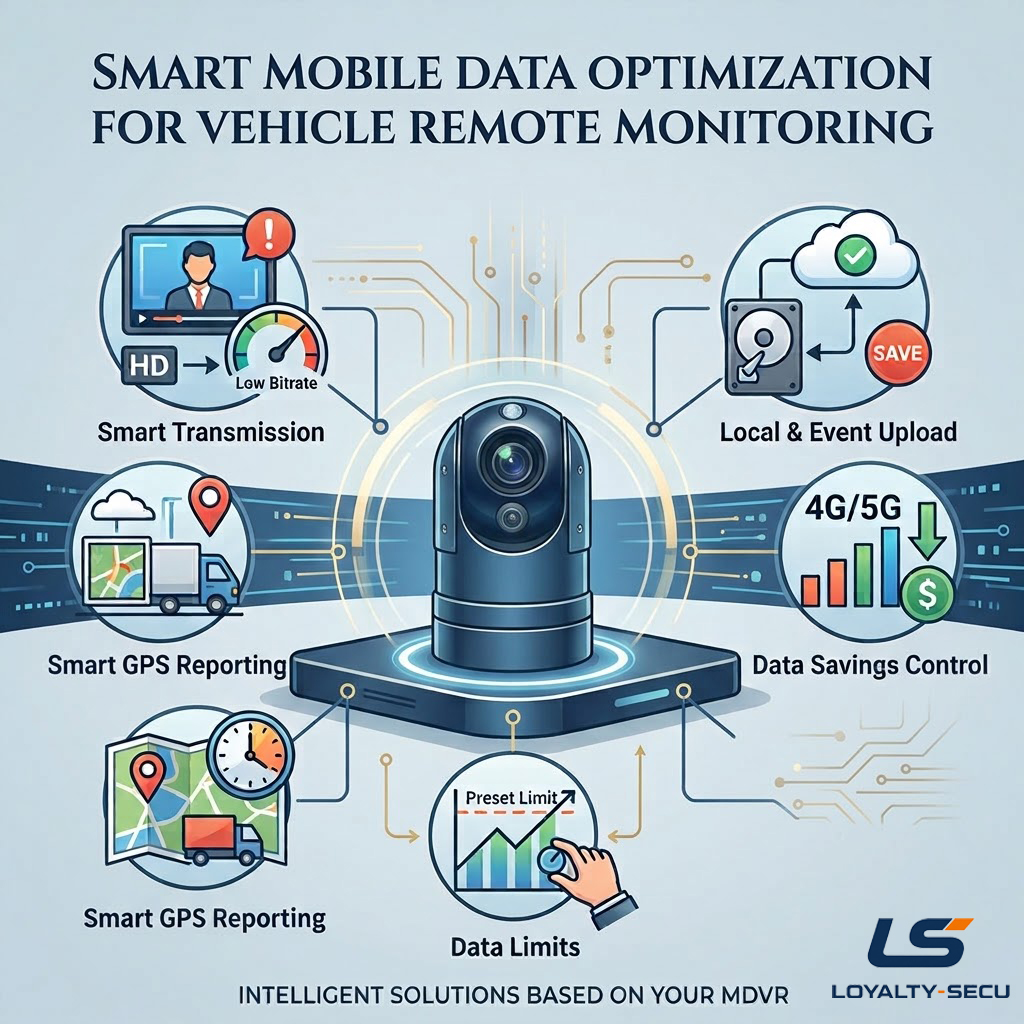
Instead of continuously transmitting high-definition video, the system can use low-bitrate video for routine monitoring. When an alarm occurs, such as driver fatigue, speeding, or route deviation, the system can switch to high-definition video for further review, if supported.
Scheduled monitoring and on-demand live viewing can also help reduce unnecessary video transmission. When no abnormal events occur, the system does not need to maintain continuous live streaming around the clock.
2. Separate Local Recording from Remote Video Uploads
Optimizing video upload rules can further reduce mobile data consumption.
The onboard MDVR can record and store video locally, while the remote platform uploads only short video clips or snapshots related to alarm events, if supported by the system.
Complete video recordings do not need to be uploaded continuously. When fleet managers need to review historical footage, they can retrieve the required recordings remotely.
This approach helps reduce continuous mobile data usage while retaining important video evidence.
3. Adjust Video Parameters to Balance Image Quality and Data Usage
Appropriate adjustments to video resolution and frame rate can help balance image quality and mobile data consumption.
For routine road monitoring, a lower resolution or frame rate may be sufficient. For applications that require clearer images, such as driver monitoring, suitable image quality should be maintained.
Unnecessary data transmission, such as continuous audio uploads when audio is not required, can also be reduced. Audio can be transmitted when needed for specific alarm events, depending on the system’s capabilities.
4. Use Wi-Fi to Reduce Mobile Data Consumption
Vehicles may have access to Wi-Fi when parked at a depot, factory, or parking facility.
Where supported by the system, video files and operational logs can be synchronized over Wi-Fi instead of using mobile data. Mobile networks can then be reserved primarily for remote monitoring while vehicles are on the road.
This approach helps reduce the amount of mobile data used for transferring large files.
5. Set Mobile Data Limits
Setting mobile data usage limits can help fleet operators control communication costs.
When monthly data consumption approaches a predefined limit, the system can restrict high-definition video streaming while retaining essential information transmission, such as GPS positioning and text-based alarm notifications, if supported.
This helps prioritize important monitoring functions while avoiding unnecessary mobile data consumption.
6. Optimize GPS Reporting Frequency
GPS tracking and background data transmission also contribute to overall mobile data usage.
For vehicles operating under normal conditions, the GPS reporting interval can be adjusted where appropriate. When a vehicle is parked and the engine is switched off, the system can reduce reporting frequency or enter a low-power mode, depending on the application requirements.
These adjustments help reduce unnecessary background data transmission.
Conclusion
Optimizing mobile data usage in vehicle remote monitoring systems involves several practical measures, including adjusting video transmission settings, separating local recording from remote uploads, optimizing image parameters, using Wi-Fi for data synchronization, setting data limits, and adjusting GPS reporting frequency.