Understanding Sensor Size, Low-Light Performance, Image Detail, and How to Choose the Right PTZ Camera
When selecting a professional PTZ camera, customers often focus on resolution, optical zoom, frame rate, and night vision distance. However, one important specification is sometimes overlooked: image sensor size.
For PTZ cameras, the difference between a 1/1.8″ sensor and a 1/2.8″ sensor can become especially noticeable when the camera is used in low-light environments, for long-distance monitoring, or for demanding professional surveillance projects.
But does a larger sensor always mean a better camera?
Not necessarily.
For most standard surveillance applications, a 1/2.8″ sensor can already provide excellent image quality. A 1/1.8″ sensor becomes more valuable when the project requires better low-light performance, cleaner images, stronger detail retention, or more demanding long-distance surveillance.
This article explains the practical differences between 1/1.8″ and 1/2.8″ image sensors and how these differences affect PTZ camera performance.
1. What Do 1/1.8″ and 1/2.8″ Sensor Sizes Mean?
Before comparing the two, it is important to understand what these numbers actually represent.
1/1.8″ and 1/2.8″ are sensor optical format designations. They do not represent the actual physical diagonal measurement of the sensor.
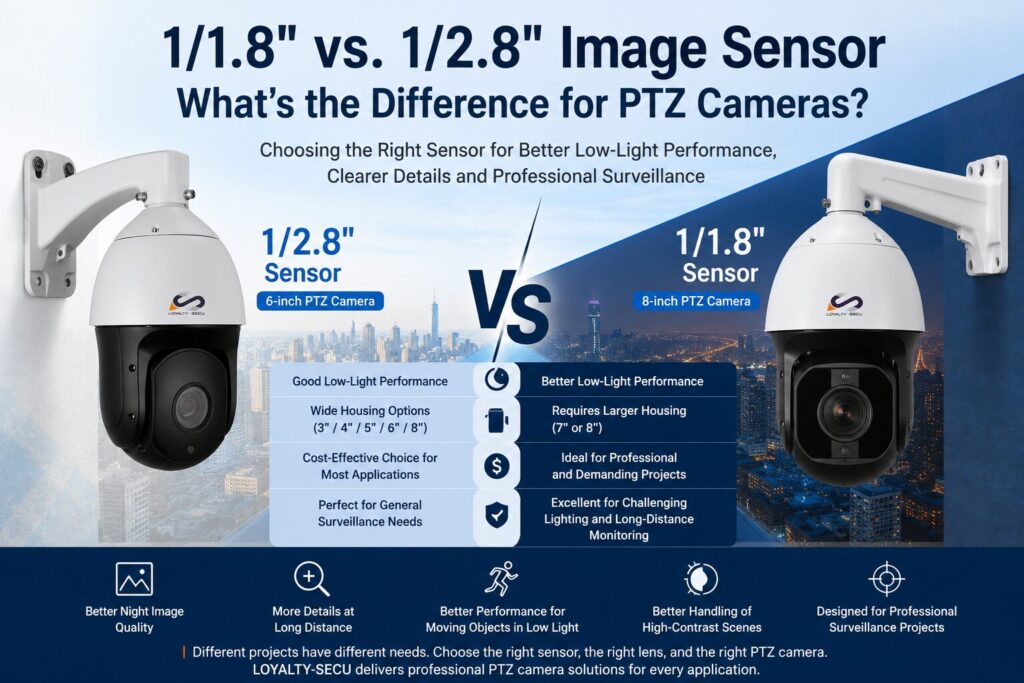
In general, a 1/1.8″ sensor has a larger imaging area than a 1/2.8″ sensor.
A larger sensor can provide more physical space for pixels. When resolution is similar, this can allow larger pixels to collect more light, which can improve signal-to-noise performance and image quality, particularly in low-light conditions.
This is one of the main reasons why larger sensors are commonly used in professional and high-performance surveillance cameras.
2. 1/1.8″ vs. 1/2.8″ Sensor: Key Differences
The following table provides a simple overview:
| Feature | 1/2.8″ Sensor | 1/1.8″ Sensor |
| Relative Sensor Size | Smaller | Larger |
| Low-Light Performance | Good | Better |
| Image Noise in Low Light | Generally higher | Generally lower |
| Detail Retention in Dark Scenes | Good | Better |
| Long-Distance Night Monitoring | Good with proper illumination | Better suited to demanding applications |
| Standard Surveillance | Excellent choice | More than necessary for many applications |
| Professional / Project Applications | Suitable depending on requirements | Highly suitable |
| Camera Housing Options | 3″, 4″, 5″, 6″, 8″ designs depending on model | Typically requires larger 7″ or 8″ housing in our design |
| Overall Cost | More economical | Higher-end |
| Best Use Case | General surveillance | Challenging lighting and demanding projects |
It is important to note that sensor size is only one part of the imaging system. Lens quality, pixel size, sensor technology, aperture, WDR, image processing, IR illumination, and optical zoom also have a significant impact on the final image.
3. Why Does a Larger Sensor Perform Better in Low Light?
Low-light performance is one of the most important differences between larger and smaller sensors.
An image sensor is made up of millions of pixels that collect light and convert it into electrical signals. When there is insufficient light, the camera needs to amplify the captured signal. Higher amplification can also make image noise more visible.
A larger sensor can provide more physical area for pixels. When the pixel size is also larger, each pixel can capture more photons and generate a stronger signal.
This can contribute to:
- Better signal-to-noise performance
- Cleaner images in low light
- Less visible image noise
- Better detail retention
- More usable images in challenging lighting conditions
Technical research from Axis also explains that larger pixels can capture more light and provide better low-light performance, while allowing shorter exposure times that can help reduce motion blur.
This is where a 1/1.8″ sensor can provide a meaningful advantage over a 1/2.8″ sensor, especially when the environment becomes very dark.
4. Where Can You Actually See the Difference?
The difference between 1/1.8″ and 1/2.8″ sensors is not equally visible in every situation.
In a well-lit environment, both can deliver excellent surveillance images.
The difference becomes more apparent when the camera faces challenging conditions.
4.1 Low-Light and Nighttime Surveillance
This is one of the most important applications for a larger sensor.
Examples include:
- Industrial parks
- Construction sites
- Mining areas
- Ports
- Large parking areas
- Warehouses
- Rural roads
- Perimeter security
- Large outdoor facilities
When ambient light becomes very limited, a 1/1.8″ sensor can provide cleaner and more detailed images compared with a smaller sensor, depending on the sensor technology, lens, and image-processing system.
For projects where nighttime image quality is critical, a larger sensor is worth considering.
5. Better Detail Retention at Night
PTZ cameras are often used to monitor objects from a considerable distance.
For example, operators may need to identify:
- People
- Vehicles
- License plates
- Industrial equipment
- Machinery
- Buildings
- Moving objects
When there is sufficient light, both 1/2.8″ and 1/1.8″ sensors can produce good images.
However, when the lighting level decreases, image noise and reduced signal quality can make fine details harder to distinguish.
A larger sensor can help maintain a cleaner image in these conditions, making it particularly useful for long-distance and nighttime PTZ surveillance.
6. Better Performance in Challenging Lighting Conditions
Many surveillance environments do not have uniform lighting.
A camera may simultaneously face:
- Bright sunlight and dark shadows
- Street lights and unlit areas
- Vehicle headlights
- Building entrances
- Indoor and outdoor areas
- Day-to-night transitions
A larger sensor can contribute to better imaging performance, but it is important to understand that sensor size alone does not determine dynamic range.
The final result also depends on:
- Sensor architecture
- Pixel design
- Lens performance
- WDR technology
- Exposure control
- ISP image processing
Therefore, a professional PTZ camera should be evaluated as a complete imaging system rather than by sensor size alone.
7. How Does Sensor Size Affect Fast-Moving Objects?
PTZ cameras are frequently used to monitor moving vehicles, machinery, and people.
In low-light environments, a camera may need a longer exposure time to collect enough light. If the exposure becomes too long, moving objects can appear blurred.
Larger pixels can capture more light during a shorter exposure, giving the camera more flexibility to maintain a usable shutter speed.
This can be particularly useful for applications such as:
- Traffic monitoring
- Vehicle surveillance
- Airport vehicles
- Emergency vehicles
- Industrial machinery
- Construction equipment
- Railway monitoring
A larger sensor does not automatically eliminate motion blur, but it can provide an advantage when the camera needs to balance light sensitivity and motion capture.
8. Why Is 1/2.8″ Sensor Still Enough for Most Surveillance Applications?
A larger sensor sounds better on paper, but that does not mean every project needs one.
For general surveillance and standard monitoring applications, a 1/2.8″ sensor can already be an excellent and practical choice.
Typical applications include:
- Home security
- Retail stores
- Office buildings
- Small businesses
- Parking lots
- General perimeter monitoring
- Standard building surveillance
- Regular outdoor monitoring
If the environment has adequate ambient lighting or effective IR illumination, a 1/2.8″ sensor can provide very good surveillance performance.
Therefore, choosing a 1/1.8″ sensor for every application may result in unnecessary cost and oversized system specifications.
The right sensor is the one that matches the actual surveillance requirements.
9. Why Does Sensor Size Also Affect PTZ Camera Housing Design?
Sensor size is not only an imaging consideration. It can also influence the overall optical and mechanical design of a PTZ camera.
A larger sensor needs a compatible optical system. When combined with a high-performance zoom lens and a PTZ mechanism, this can require more internal space.
For our PTZ camera designs, 1/2.8″ sensor models can be developed with different camera housing sizes, including approximately 3-inch, 4-inch, 5-inch, 6-inch, and 8-inch designs, depending on the specific model.
For 1/1.8″ sensor PTZ cameras, our design typically uses a larger 7-inch or 8-inch camera housing.
This larger housing provides the necessary space for the larger sensor, compatible optical system, zoom mechanism, and other internal components.
The relationship between sensor and lens is also important. A lens must be appropriately matched to the sensor size to achieve the intended field of view and image coverage.
10. 1/1.8″ vs. 1/2.8″: Which One Should You Choose?
The best choice depends on the application.
Choose a 1/2.8″ Sensor If:
- You need a reliable camera for general surveillance.
- The monitoring environment has reasonable lighting.
- The project is cost-sensitive.
- You need a more compact PTZ camera design.
- You are monitoring homes, offices, stores, or standard parking areas.
- Extreme low-light performance is not a major requirement.
For these applications, 1/2.8″ can provide an excellent balance between image quality, camera size, functionality, and cost.
Choose a 1/1.8″ Sensor If:
- The project requires strong low-light performance.
- Nighttime surveillance is important.
- The monitoring area is large.
- Long-distance image detail is critical.
- The camera is used in industrial or infrastructure projects.
- The environment contains very limited ambient light.
- Moving targets need to be monitored in challenging lighting.
- The customer requires a higher-end professional PTZ solution.
For these demanding applications, the additional performance of a larger sensor can justify the higher system cost.
11.Typical Applications for Each Sensor
| Application | Recommended Sensor |
| Home Security | 1/2.8″ |
| Retail Stores | 1/2.8″ |
| Office Buildings | 1/2.8″ |
| Small Business | 1/2.8″ |
| Standard Parking Areas | 1/2.8″ |
| General Perimeter Monitoring | 1/2.8″ |
| Construction Sites | 1/2.8″ / 1/1.8″ |
| Large Industrial Areas | 1/1.8″ |
| Mining Sites | 1/1.8″ |
| Ports | 1/1.8″ |
| Critical Infrastructure | 1/1.8″ |
| Long-Distance Night Monitoring | 1/1.8″ |
For construction sites and similar applications, the choice depends on the size of the site, monitoring distance, lighting conditions, and whether nighttime detail is critical.
12. Is a 1/1.8″ Sensor Always Better?
No.
This is an important point when selecting a PTZ camera.
A larger sensor can provide advantages, especially in low-light conditions, but it is not a guarantee of superior image quality in every situation.
The final image depends on the complete imaging system:
Sensor + Pixel Size + Lens + Aperture + ISP + WDR + IR + Optical Zoom + Image Processing
For example, a large sensor paired with an unsuitable lens may not deliver its full potential. A well-designed camera needs the sensor and lens to be properly matched.
Therefore, instead of simply asking:
“Which sensor is bigger?”
A better question is:
“Which sensor and imaging system are appropriate for my application?”
13. 1/1.8″ or 1/2.8″? A Simple Decision Guide
If your application is mainly:
Standard surveillance + normal lighting + cost efficiency
→ 1/2.8″ sensor is usually sufficient.
If your application is:
Professional project + low light + long-distance monitoring + demanding image detail
→ 1/1.8″ sensor is worth considering.
This is why there is no single sensor size that is perfect for every surveillance project.
The best solution is to match the camera configuration to the actual environment and surveillance objectives.
14. Choosing the Right PTZ Camera for Your Project
When selecting a PTZ camera, we recommend considering more than sensor size.
Key factors include:
1. Sensor Size
Determines the basic light-capturing capability and imaging characteristics.
2. Resolution
Higher resolution can provide more image detail, but it should be balanced with pixel size and sensor performance.
3. Optical Zoom
Essential for long-distance surveillance and target identification.
4. Lens Quality
A high-quality lens is necessary to make full use of the sensor’s resolution and imaging capability.
5. Low-Light Performance
Important for nighttime and poorly illuminated environments.
6. WDR
Useful for scenes containing both very bright and very dark areas.
7. IR Night Vision
Important for monitoring in environments with little or no visible light.
8. Frame Rate and Shutter Performance
Important when monitoring moving vehicles, machinery, or people.
9. PTZ Speed
Important when the camera needs to quickly move between multiple monitoring targets.
10. Installation Environment
Camera size, weather resistance, temperature range, mounting method, and power requirements should all be considered.
15. LOYALTY-SECU PTZ Camera Solutions
At LOYALTY-SECU, we understand that different surveillance projects have different requirements.
For standard surveillance applications, a 1/2.8″ sensor PTZ camera can provide an excellent combination of image quality, camera size, functionality, and cost efficiency.
For demanding professional projects, a 1/1.8″ sensor PTZ camera can provide improved low-light imaging performance and better image usability in challenging environments.
Our PTZ camera solutions can be configured for applications such as:
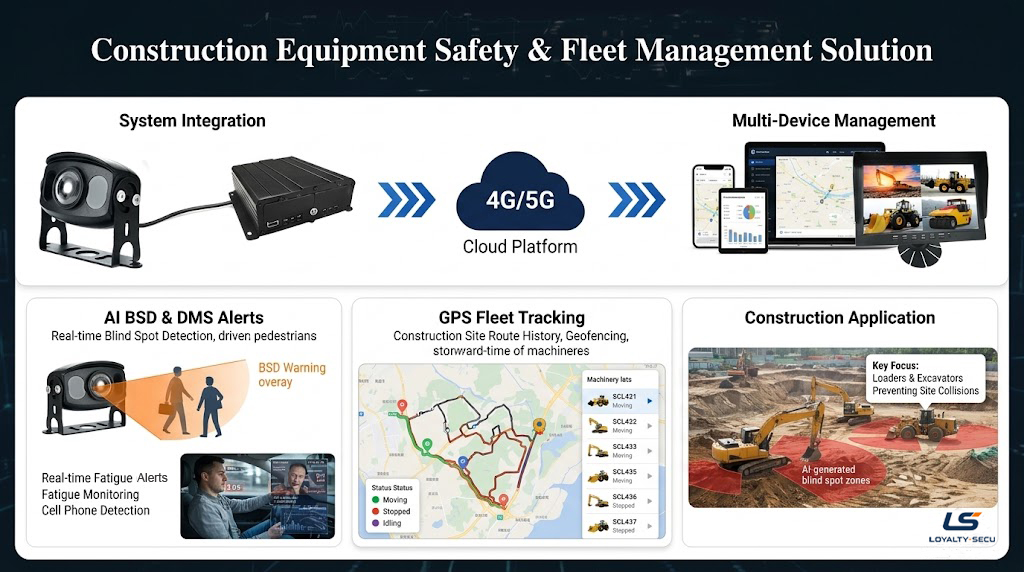
- Construction sites
- Mining
- Industrial facilities
- Ports
- Transportation
- Large parking areas
- Perimeter security
- Critical infrastructure
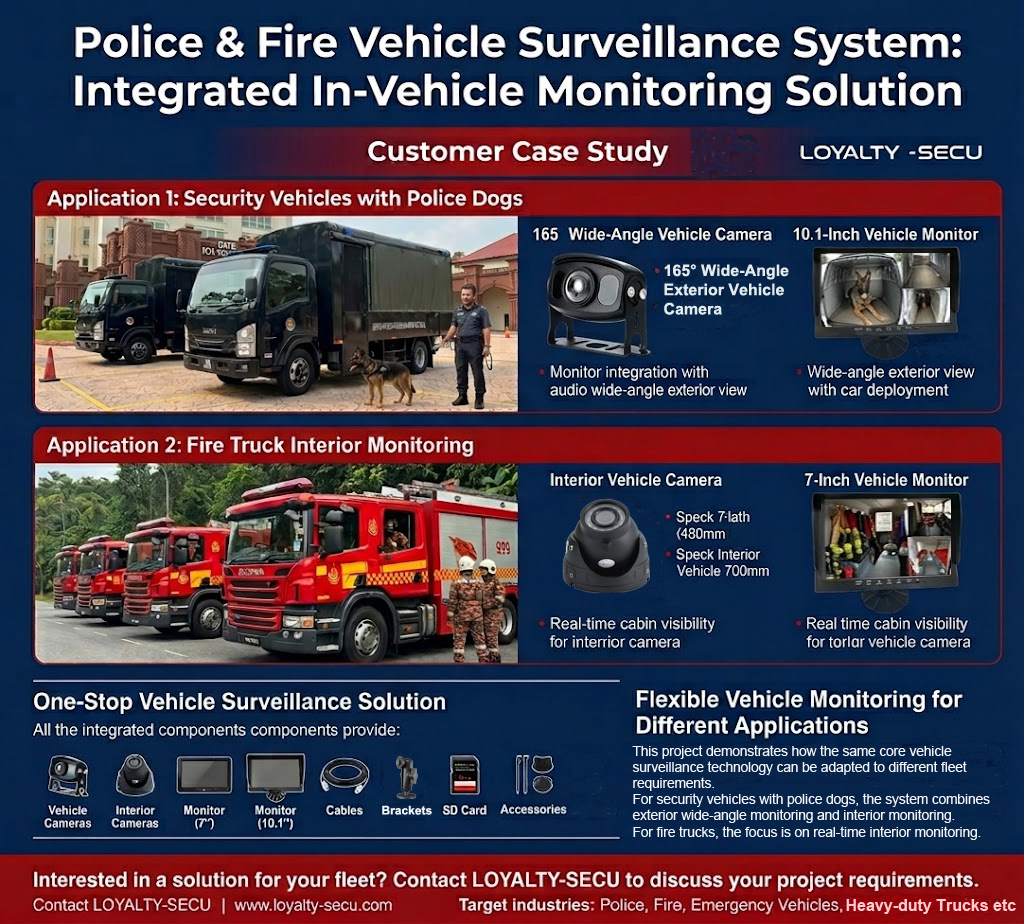
- Special vehicle monitoring
- Long-distance outdoor surveillance
Rather than simply recommending the largest sensor, we focus on matching the sensor, lens, optical zoom, image processing, IR illumination, and PTZ configuration to the actual project requirements.
Conclusion: Choose the Right Sensor, Not Simply the Bigger Sensor
The difference between 1/1.8″ and 1/2.8″ image sensors becomes most meaningful when the surveillance environment is challenging.
A 1/2.8″ sensor is already a practical and capable choice for most general surveillance applications.
A 1/1.8″ sensor becomes more valuable when the project requires better low-light performance, cleaner nighttime images, long-distance monitoring, and higher image quality under difficult lighting conditions.
The key is not simply choosing the largest sensor.
The key is choosing the right imaging system for the right application.
If you are planning a PTZ camera project and are unsure whether a 1/1.8″ or 1/2.8″ sensor is more suitable, contact the LOYALTY-SECU team and share your monitoring distance, lighting conditions, target objects, required optical zoom, and application environment.
We can help you select the right PTZ camera configuration for your project.